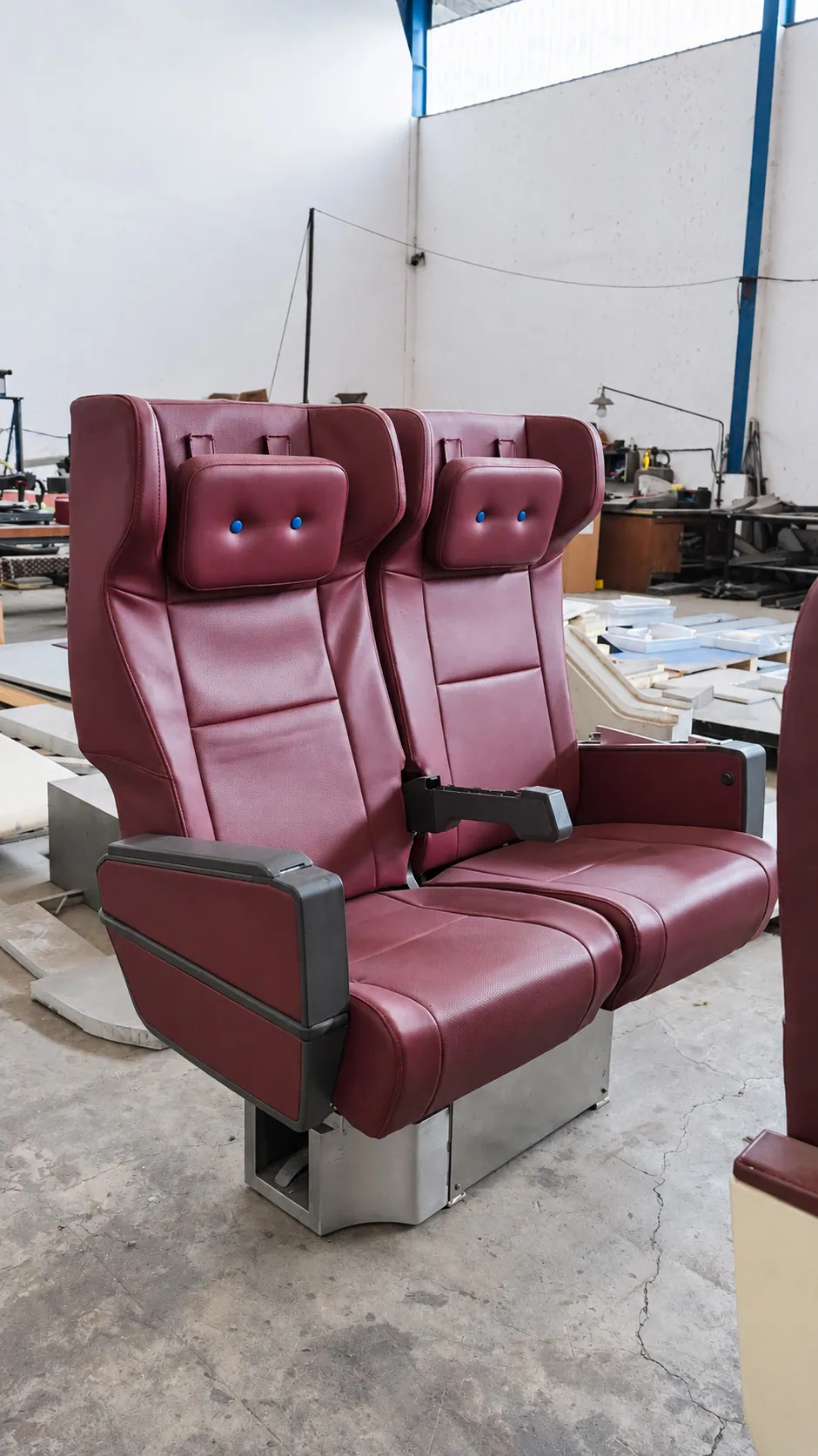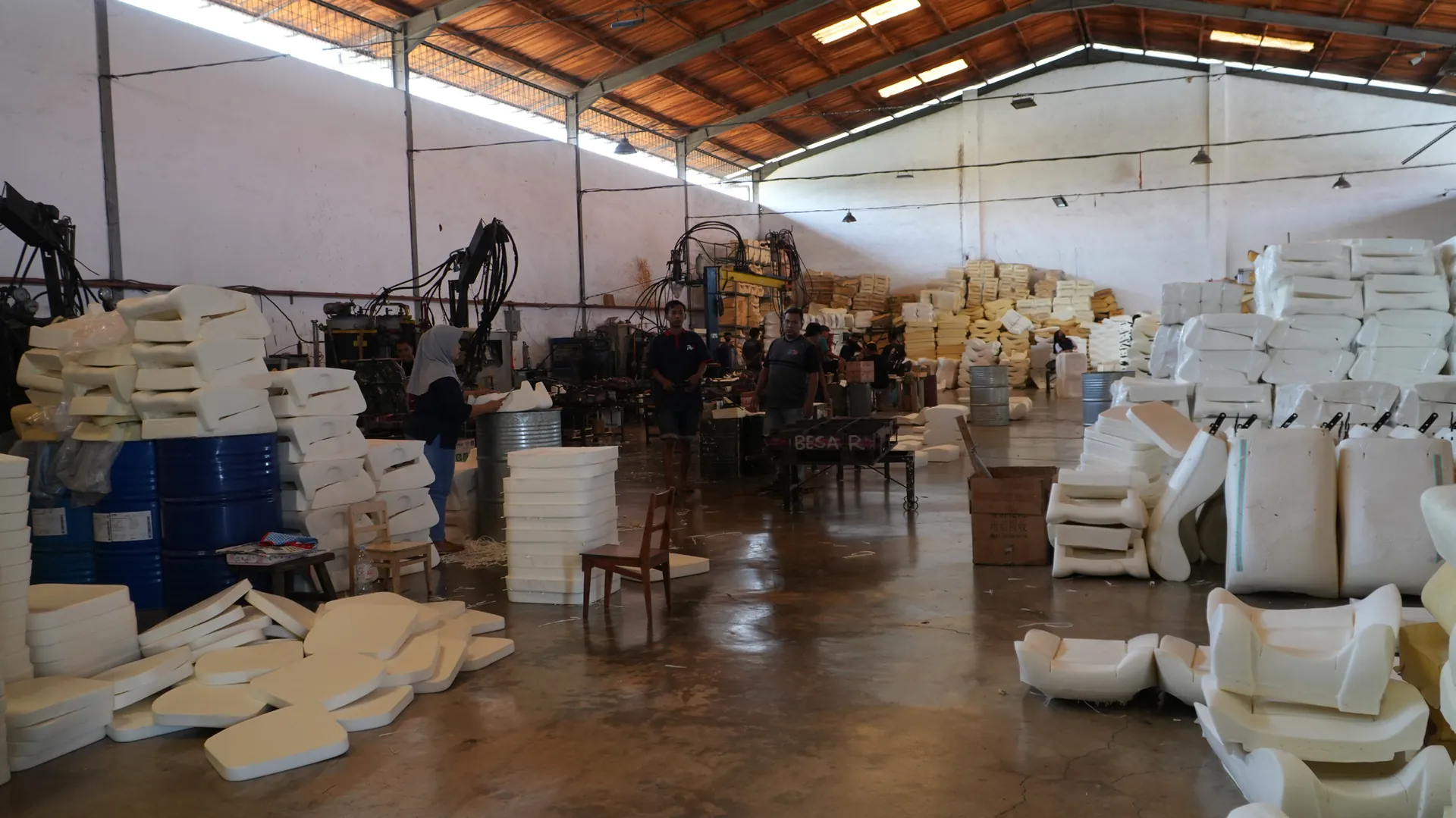
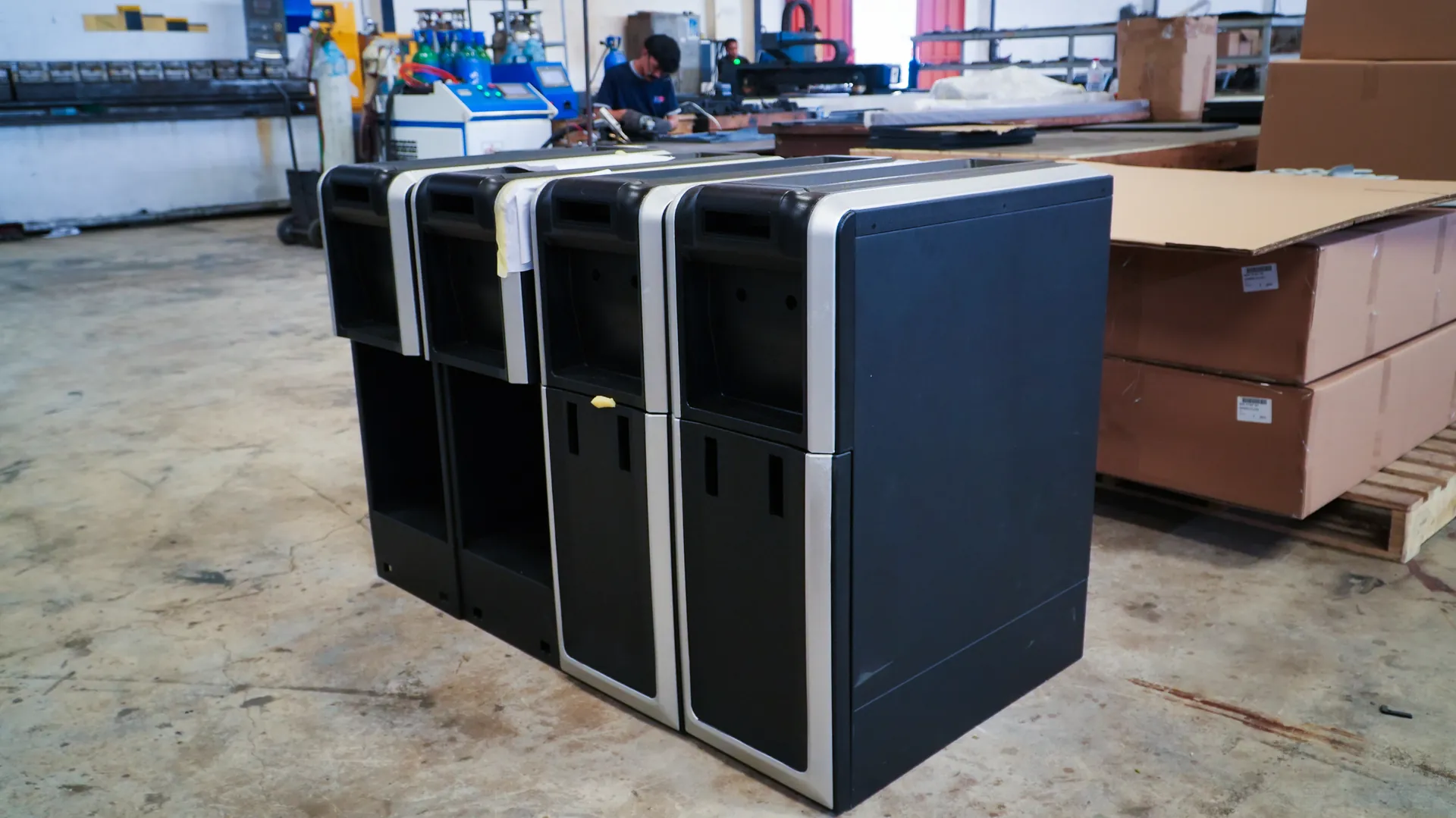
Large plastic-like parts - bus panels, bumpers, covers, machine enclosures - are often assumed to be injection-molded thermoplastic. For many of these parts, especially in lower and medium volumes, reaction injection molding (RIM) with polyurethane is the smarter choice. Here is how it works and when it makes sense.
How RIM works
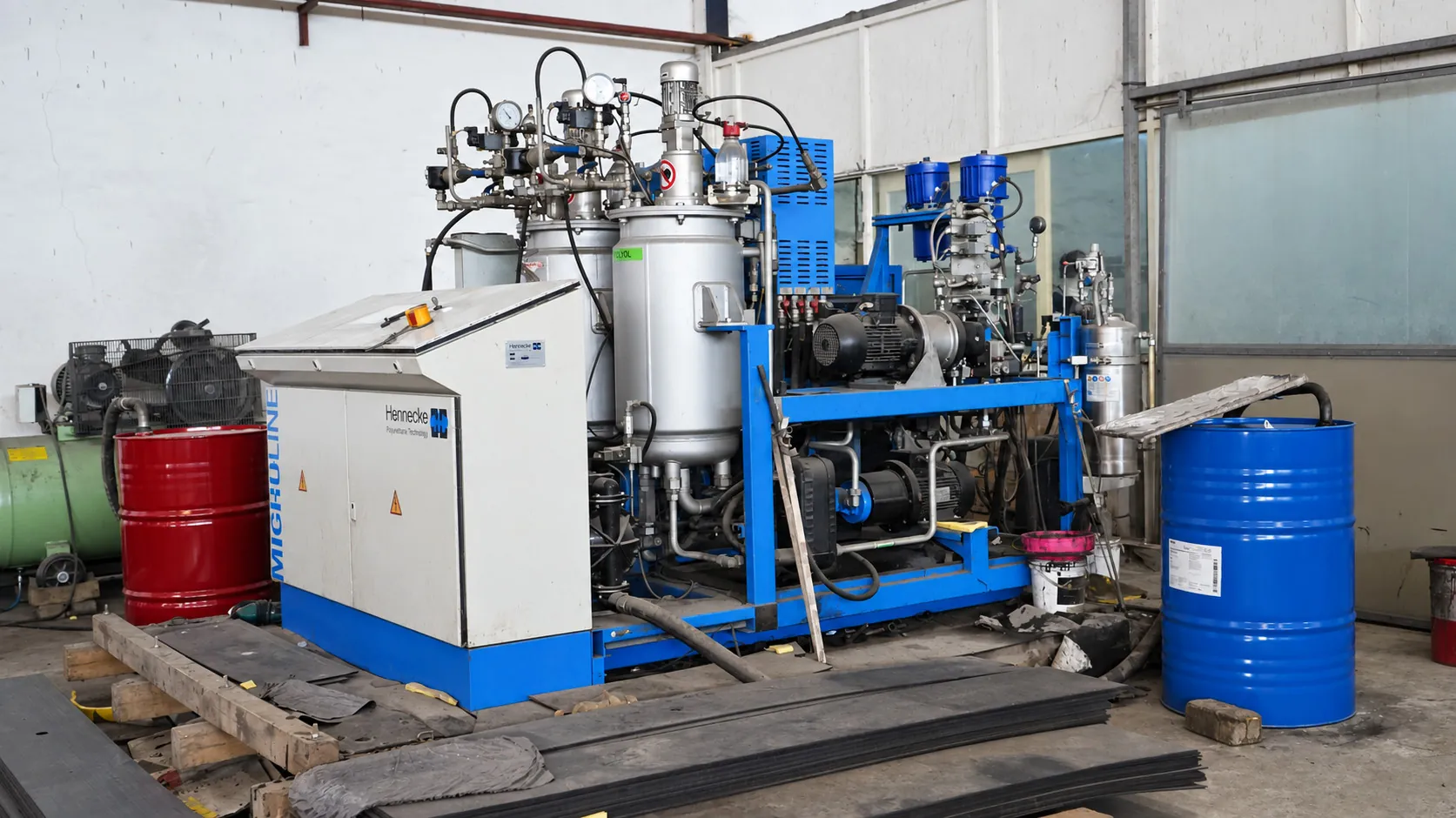
RIM starts with two liquid components: a polyol and an isocyanate. In the machine they are kept separate, then mixed under high pressure in the mixing head and injected into a closed mold. Inside the mold they react chemically and cure into a solid polyurethane part.
The key difference with thermoplastic injection molding is that the material is a low-viscosity liquid when it enters the mold. It flows easily, fills large and complex shapes, and needs far less clamping force.
Why choose RIM?
- Large parts in one piece. Panels, bumpers and covers that would be difficult or expensive to make another way.
- Design freedom. Varying wall thickness, ribs, inserts and complex curves are possible in a single molding.
- Lighter, more affordable molds. Because the pressure in the mold is low, tooling can be simpler than for thermoplastic injection molding - a big advantage when volumes do not justify heavy steel molds.
- Strong and durable. RIM polyurethane parts are tough and impact resistant, and can be painted or finished to match the rest of the product.
Typical applications
- Bus and car exterior parts: front and rear panels, bumpers, covers
- Motorcycle parts and transportation equipment
- Industrial housings, enclosures and machine covers
RIM or RIM spray?
For some shell-shaped parts, RIM spray is an alternative: the polyurethane is sprayed onto a mold surface instead of injected into a closed mold. It suits parts with custom shapes where a closed mold is not practical. Which one fits best depends on the shape, the size and the number of parts.
Planning a RIM part
To give you a realistic proposal, it helps to share:
- A drawing or 3D model (STEP or IGES), or a sample of the existing part
- The expected quantity per month or per year
- Requirements for strength, surface finish and color
Send it through the inquiry form, or start with the solution finder.